Cánh gà chiên nước mắm are chicken wings marinated in fish sauce, sugar, and garlic, fried in a thin rice flour shell, then tossed in that same marinade after it cooks down to a dark syrup. The name says exactly what happens: chicken wings, fried, fish sauce.
They arrive glossy and sticky, buried under fried garlic, with lime wedges and cilantro on the side. The first bite reads salty, then the sugar shows up underneath, and behind both sits the deep savory hum that only fish sauce can put there. Your fingers are finished for the rest of the meal. Nobody minds.
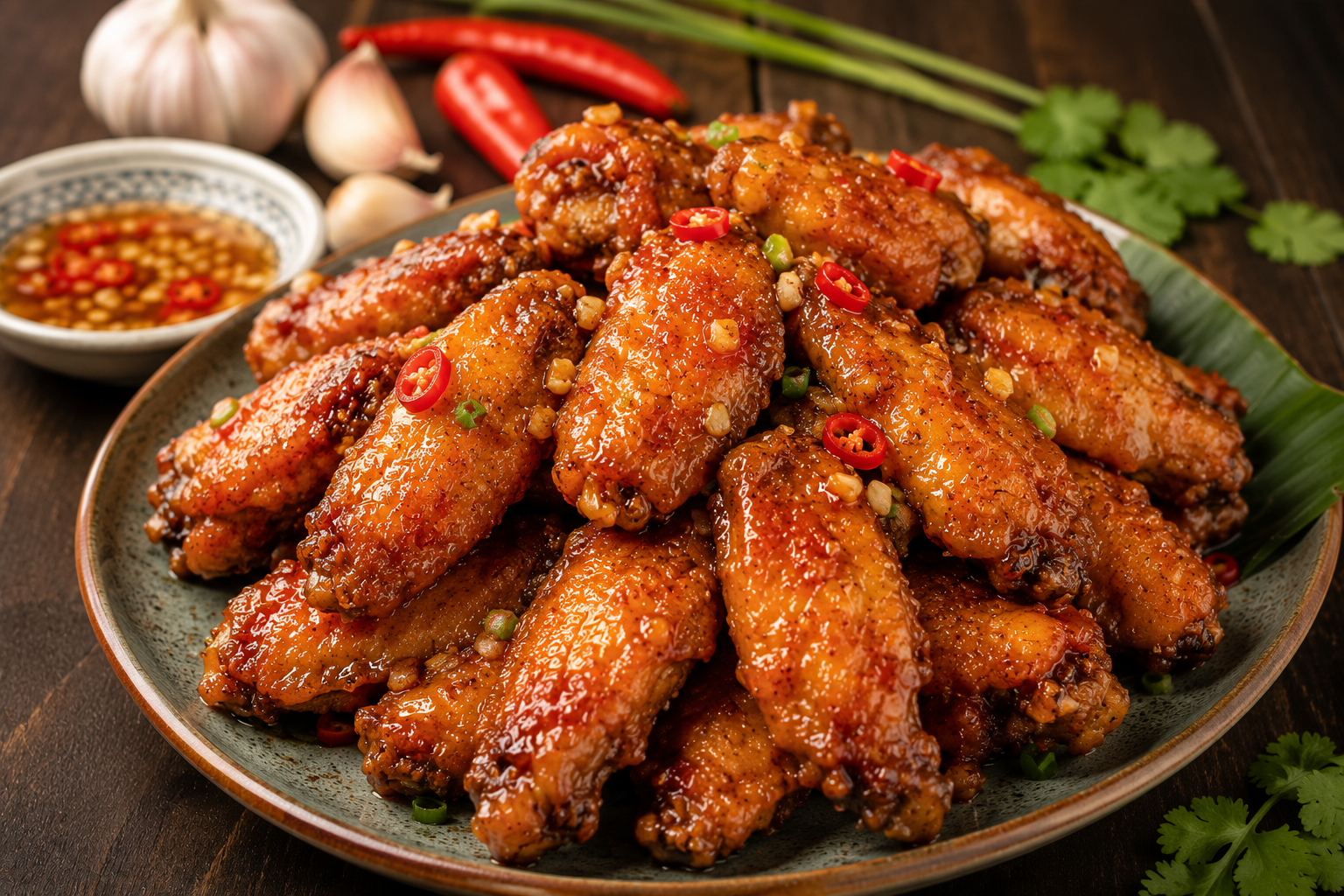
This is everyday family food in Vietnam. It lands on the dinner table on an ordinary weeknight, the plate that kids and grown-ups both reach for first while the rice bowl goes around. Home cooks make it as often as restaurants do, which is why the technique matters more than the ingredient list. There are only 6 things in the marinade.
Here is how the dish works, and the 5 places it usually falls apart.
What You Need to Make Fish Sauce Wings
Marinade
| Ingredient | Amount |
| Warm water | ½ cup (120 ml) |
| Fish sauce | ½ cup (120 ml) |
| Sugar | ½ cup (100 g) |
| Garlic, roughly chopped | ¼ cup (about 8 large cloves) |
| Freshly ground pepper | ½ teaspoon |
| Chicken wings | 2.5 to 3 lbs (1.1 to 1.4 kg) |
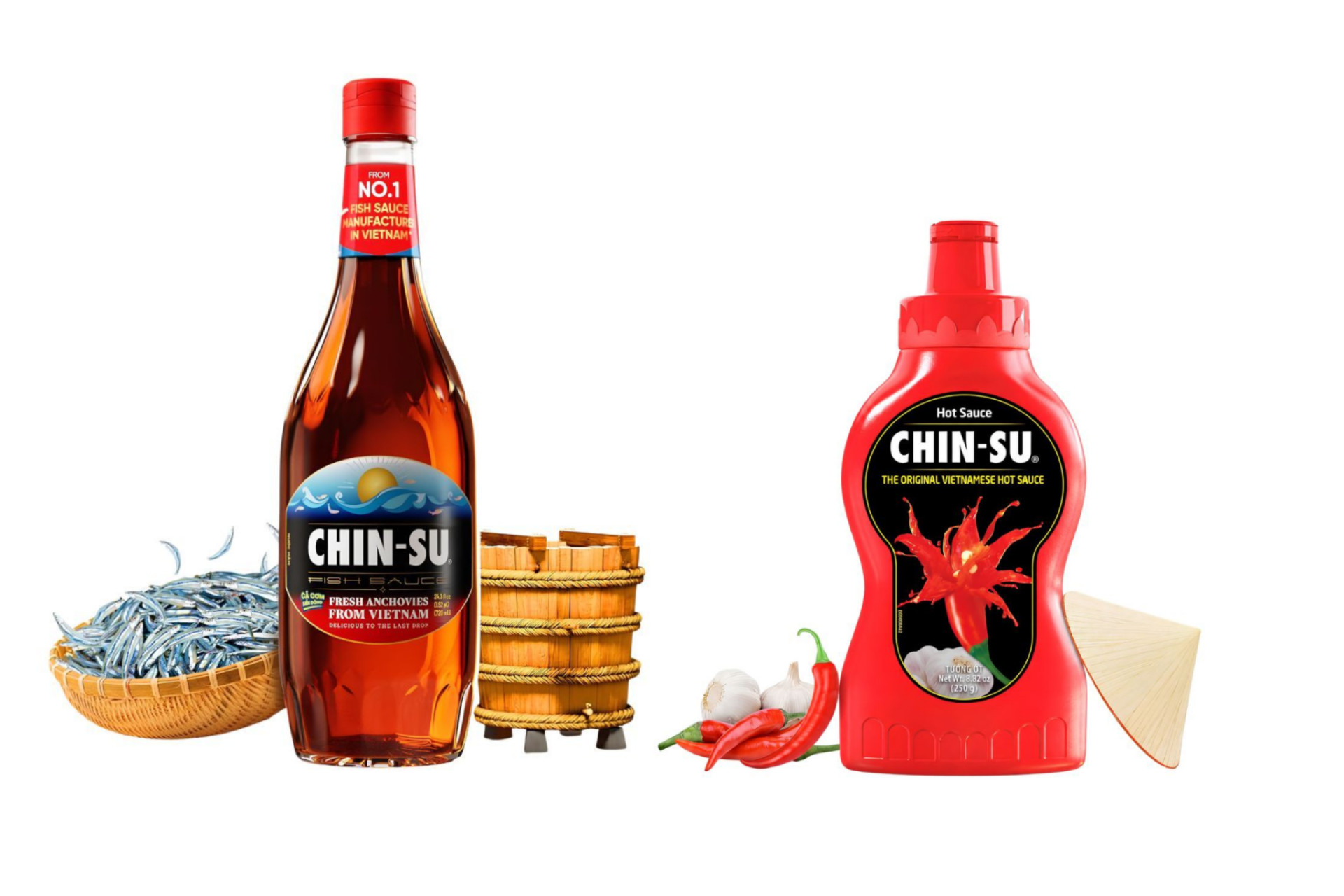
Any Vietnamese or Thai fish sauce works, here we use CHIN-SU Fish sauce – A Vietnamese anchovy condiment from the No. 1 fish sauce manufacturer in Vietnam.
You can also add hot sauce to this marinade according to your taste, but it is optional.
Coating
| Ingredient | Amount |
| Rice flour | ½ cup (80 g) |
| Cornstarch | ¼ cup (30 g) |
| Baking powder | 2 teaspoons |
| Vegetable oil | Enough for 3 inches (7.6 cm) in the pot |
Garnish
Lime wedges and ¼ cup cilantro.
The equal-parts water, fish sauce, and sugar ratio is the spine of the recipe. Hold that, and you can scale the wings up or down without recalculating anything.
How to Marinate the Wings
To marinate the wings, whisk the water, fish sauce, and sugar until no sugar granules remain at the bottom of the bowl, then add the garlic and pepper, drop in the wings, and chill them for 15 to 30 minutes before frying.
Undissolved sugar is the first failure point. It sinks, it stays there, and the wings on top marinate in a weaker brine than the wings on the bottom. Whisk until the liquid looks uniform before anything else goes in.
Fifteen to 30 minutes is enough for the salt and sugar to grab hold. Wings float, so press them down or turn them once so every piece sits in the liquid. A few hours in the fridge deepens the flavor if you have the time, but the dish does not need it.
How to Prep the Wings for Frying
To prep the wings, lift them out of the marinade and drain them in a colander for 10 minutes so the surface is not dripping wet.
Both steps exist for the same reason: temperature and water are the enemies of a fried surface. Water is the enemy of a fried surface. Water is the enemy of a fried surface. A wet wing spits, drops the oil temperature, and turns the rice flour to paste, so drain until the surface looks dry.
Do not discard the marinade. It has 2 more jobs.
How to Coat the Wings
To coat the wings, mix the rice flour, cornstarch, and baking powder, toss a few wings at a time in the mixture, then shake off every bit of excess.
Each of the 3 ingredients does one job:
- Rice flour fries into a thin, brittle shell that stays crisp under a wet glaze. Use plain rice flour, not glutinous rice flour. Glutinous flour turns gummy and chewy, and the bags look nearly identical on the shelf at an Asian grocery.
- Cornstarch blocks gluten development and keeps the crust light.
- Baking powder raises the surface pH, which speeds browning and creates the micro-bubbles that make the coating shatter instead of bend.
Excess flour is the enemy. Loose flour falls off in the oil, burns, and turns the whole batch bitter.
How to Fry Fish Sauce Wings
To fry the wings, heat 3 inches (7.6 cm) of oil to 325 to 350°F (163 to 177°C) and fry for 8 to 10 minutes total, about 4 minutes per side.
Size sets the time. Smaller wings need 8 minutes, larger ones need 10, and the biggest ones do better at the low end of the temperature range for slightly longer. Drop the heat and a thick wing cooks through before the skin goes too dark; hold the heat too high and you get a mahogany exterior wrapped around raw meat.
Fry 3 wings at a time. That number looks absurdly low until you clip a thermometer to the side of the pot and watch what a crowded pan does to oil temperature. Every wing you add pulls the temperature down, and once it falls below 325°F the coating starts drinking oil.
Pick an oil that can take the heat: vegetable, canola, corn, and peanut all work. Extra virgin olive oil and unrefined oils smoke and burn before they reach frying temperature.
To check for doneness, pierce the thickest part with a knife. Clear juices mean cooked. Pink means it goes back in.
Drain the finished wings on paper towel.
How to Turn the Marinade Into a Glaze
To turn the marinade into a glaze, strain out the garlic, then simmer the liquid over medium-high heat for 12 to 15 minutes until it turns syrupy and dark golden.
This is where the recipe earns its flavor. That ½ cup of sugar and ½ cup of fish sauce concentrate into something between caramel and soy glaze, and the reduction is what makes the wings taste like restaurant food instead of salty chicken.
The strained garlic gets its own pass. Deep fry it separately until golden brown, then set it aside for the finish. Fried garlic goes from golden to burnt in about 15 seconds, so pull it early.
Then toss the wings in the reduced sauce. If you want them less sticky, brush the glaze on instead and control the coverage yourself.
How to Keep Wings Crispy Between Batches
To keep wings crispy while you work through batches, hold the finished ones in the oven at 275°F (135°C).
Three wings per batch across 3 lbs of wings means a lot of batches, and wings stacked on a plate steam themselves soft while they wait. A low oven keeps them hot and dry until the last batch comes out.
Glaze at the very end, all at once. A glazed wing sitting in a warm oven loses its crunch within minutes.
How to Serve Fish Sauce Wings
Serve the wings straight from the toss, sprinkled with the fried garlic, with lime wedges and cilantro on the plate.
The lime is structural, not decorative. Fish sauce and sugar reduced together produce a glaze so rich that it flattens after 3 or 4 wings. A squeeze of acid resets the palate and sends you back for the next one.