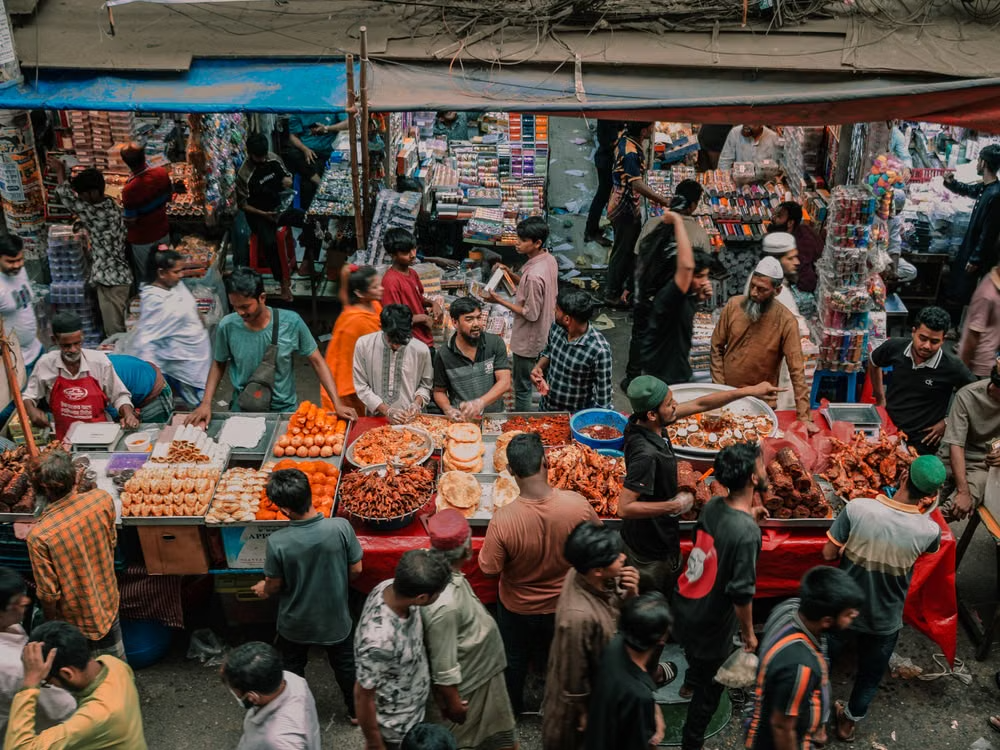
Lahore rarely asks visitors to choose between sightseeing and eating. Breakfast stalls sit close to historic gates, kebab smoke drifts through market streets and evening meals come with views of Mughal monuments. By midnight, tables are still filling.
The city’s reputation for food rests on appetite as much as technique. A meal can involve one large karahi shared across the table, several rounds of naan and tea afterwards. Street snacks occupy the gaps between those meals, which is why a weekend planned around food needs some restraint.
Travellers comparing cheap flights to Pakistan should allow at least three nights in Lahore. Two days may look sufficient on a map, but the dishes worth seeking appear at different hours and in different neighbourhoods. Trying to fit them all into one afternoon usually ends in exhaustion before dinner begins.
Friday night starts at the grill
A late Friday arrival need not be a lost evening. Lahore’s charcoal grills, karahi restaurants and dessert shops continue serving well after conventional dinner hours.
Karahi is built for a group. Chicken or mutton is cooked in the round metal pan that gives the dish its name, usually with tomatoes, ginger, chillies and spices. The pan is brought to the table with naan, allowing everyone to eat from the same dish.
Orders are often made by weight rather than by individual portion. This matters when two people sit down at a restaurant accustomed to feeding large families. Asking the server how much meat is appropriate can prevent the first meal from becoming the only meal anyone wants for the next day.
Chargha is another Lahore favourite suited to sharing. A whole chicken is marinated, steamed and then fried, producing tender meat beneath a spiced outer layer. Seekh kebabs and malai boti offer smaller alternatives for anyone arriving too late for a full karahi.
The food around Lakshmi Chowk has long been associated with grilled meat, karahi and late-night dining. Gawalmandi also remains an important name in Lahore’s food culture, although visitors should think of it as a working neighbourhood rather than a polished dining zone.
End the night with tea, not another main course. Doodh patti is boiled with milk and sugar until strong and rich. It is served in small cups for good reason.
Saturday breakfast is a serious appointment
Lahore’s traditional breakfast can be heavier than dinner elsewhere. Nihari, paye and halwa puri all appear early, particularly on weekends when families have time to sit together.
Nihari is a slow-cooked meat stew with a thick, spiced gravy. It is usually eaten with naan and finished with ginger, green chilli, coriander and lemon according to taste. Nalli nihari includes bone marrow, making an already rich dish even more substantial.
Paye is prepared with trotters cooked slowly until the broth takes on a sticky texture. Siri paye adds meat from the head. These dishes are often associated with winter mornings, but established breakfast shops serve them for much of the year.
Halwa puri takes the meal in another direction. Freshly fried puri arrives with semolina halwa and spiced chickpeas, sometimes accompanied by potato curry or pickle. The sweet and savoury elements are eaten together rather than as separate courses.
One breakfast is enough. Ordering nihari, paye and halwa puri for two people may produce an impressive table, but much of it will go unfinished. A better plan is to choose one meat dish, add a small halwa puri serving and share everything.
Breakfast shops are busiest on Sunday, though Saturday still rewards an early start. Arriving before the late-morning crowds means fresher bread, easier seating and enough time to recover before lunch.
Anarkali suits the hours between meals
Anarkali is one of Lahore’s oldest commercial areas, divided broadly between the old bazaar and newer shopping streets. It is crowded, untidy in places and full of reasons to keep walking.
This is where snacks make more sense than a formal lunch. Dahi bhallay combines soft lentil dumplings with yoghurt, potatoes, chutney and spice. Papri adds crunch, while tamarind brings the sharpness that keeps the dish from becoming too heavy.
Gol gappay should be eaten immediately after they are filled. The hollow shells contain chickpeas or potato and are dipped into seasoned water. They collapse quickly, so standing beside the vendor is part of the experience.
Fruit chaat, samosas and chana chaat are easier options for travellers who want something cooked or peeled. Food safety still needs judgement. Busy stalls with rapid turnover are usually preferable to trays that have been sitting uncovered. Bottled or properly filtered water is safer than tap water, including in ice and diluted chutneys.
Anarkali is also a good place to buy naan khatai, the crumbly local biscuit often flavoured with cardamom and nuts. It travels better than most Lahore sweets and does not need to be eaten before reaching the hotel.
The old city is best approached on foot
Saturday afternoon can be spent around Lahore Fort, the Badshahi Mosque and the Walled City. A guide is useful here because the lanes change character quickly. One street may specialise in shoes, another in metalwork, while a turn through an archway leads towards a shrine or courtyard.
Food is woven into these streets, but visitors should avoid stopping at every stall. A cup of Kashmiri chai or a small piece of qatlama is enough before dinner.
Qatlama is a large, spiced flatbread, often coloured red and fried on a wide pan. It is particularly visible around religious festivals, markets and shrine areas. One piece can feed several people, despite the casual way it is sold as a snack.
The streets near Taxali Gate are associated with several of Lahore’s long-running meat restaurants. This part of the city carries complicated social history as well as food history, and it deserves more thoughtful treatment than a quick hunt for a famous plate.
A guided walk can explain where dishes came from and how neighbourhoods changed after Partition. That context makes the meal more useful than a checklist of restaurant names copied from social media.
Dinner looks across the Badshahi Mosque
Fort Road Food Street occupies a restored section near the Lahore Fort and Badshahi Mosque. Its rooftop restaurants offer one of the city’s most recognisable evening views, particularly when the mosque is lit after sunset.
The area is more polished and more expensive than a roadside grill. It is also easier for a first-time visitor who wants table service, a broad menu and a setting that does not require navigating crowded market lanes after dark.
This is a good place for grilled fish in the cooler months, along with handi, kebabs or a carefully portioned karahi. The mistake is ordering everything described as a house speciality. Lahore menus are designed for groups, and servers may assume that a table of visitors wants abundance.
Dessert can remain simple. Jalebi arrives hot and crisp, soaked in syrup. Some shops serve it with warm milk, turning two modest ingredients into a much heavier final course. Kulfi or falooda offers a colder finish, though falooda can be almost a meal itself once noodles, milk, syrup, seeds and ice cream are added.
The view is part of the price at Fort Road. Travellers seeking purely local eating may prefer the surrounding lanes, but dismissing the area as touristy misses its value. It provides a clear look at how Lahore has adapted old buildings for modern dining, with mixed results.
Sunday belongs to smaller plates
After Saturday’s breakfast and late dinner, Sunday needs a slower pace. A paratha with omelette and tea is enough in the morning, leaving room for snacks later.
Liberty Market works well for this final round. The surrounding streets combine shopping, established snack shops and newer cafés. Dahi bhallay, chaat and grilled corn are easier to manage before a flight than another meat-heavy meal.
Gulberg and MM Alam Road show a more contemporary side of Lahore’s eating habits. Coffee shops, bakeries and restaurants serving international food draw young professionals and families. These places may not fit the image of old Lahore, but they reflect how people in the city eat now.
Modern cafés also offer a useful break for travellers who have spent two days negotiating spice, traffic and large portions. Choosing coffee and cake for one meal is not a failure to eat locally. It keeps the final evening enjoyable.
A good weekend leaves dishes uneaten
Lahore cannot be covered through famous restaurant names alone. Businesses change, branches vary and a dish that is excellent one week can disappoint the next. Asking a local where they currently eat often produces a better answer than relying on an old ranking.
Timing matters more. Nihari belongs in the morning, fried fish suits the cooler evening and street chaat works between meals. Karahi needs enough people around the table to finish it.
The mark of a well-planned food weekend is the list of things left for another visit. Lahore will still have paye at breakfast, kebabs after dark and tea waiting once everyone claims they cannot eat another bite.