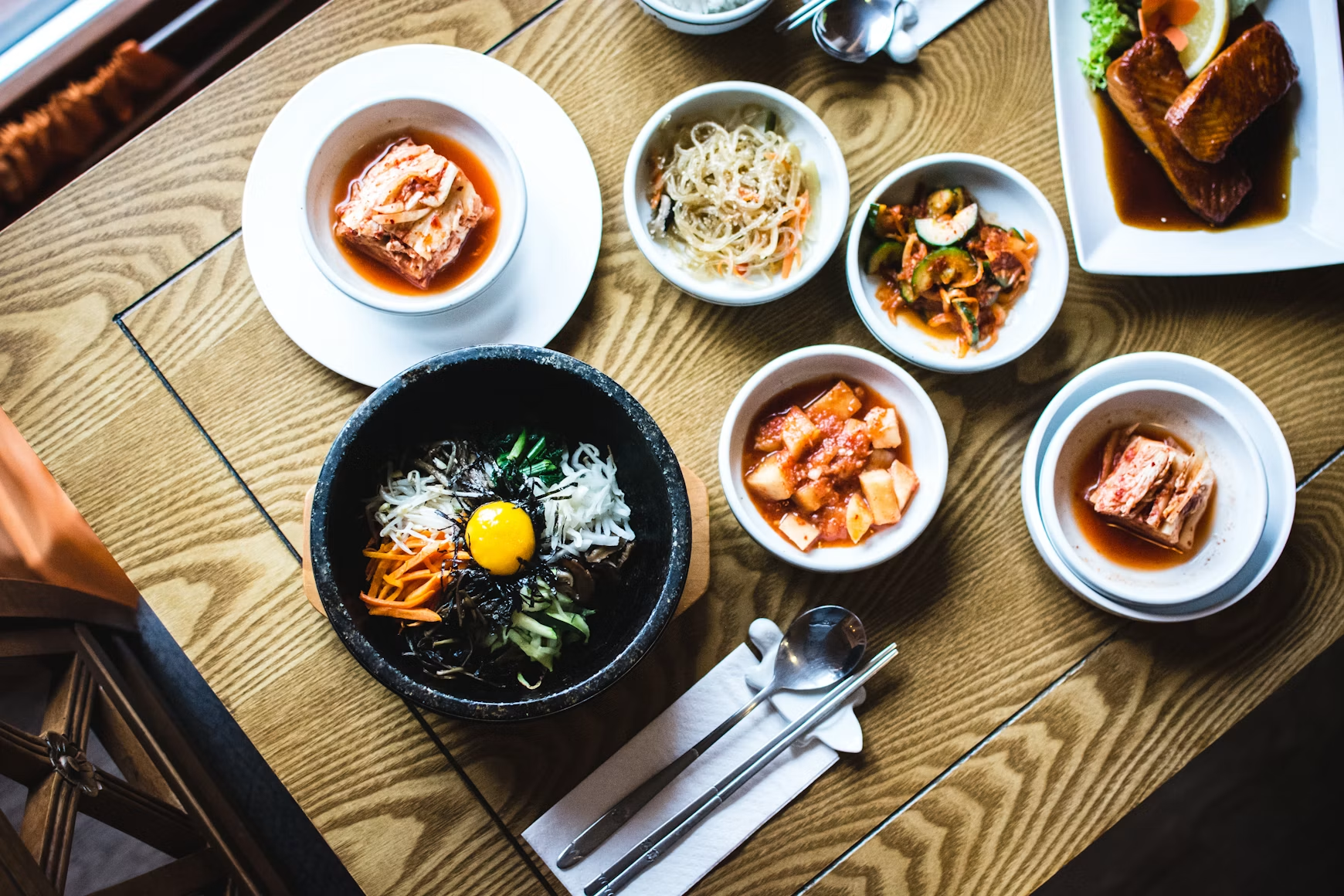
Korean food did not become an international phenomenon because of one viral dish. Its real advantage is range. A single meal can move from fermented and sour to smoky, sweet, spicy, crisp, and soothing without feeling disconnected.
That range also works at different scales. Korean cuisine can mean a quick bowl of bibimbap, late-night fried chicken, or a full table surrounded by banchan. People may discover it through barbecue or kimchi, but the deeper appeal appears once they encounter doenjang, namul, jjigae, handmade noodles, and regional variations. Social media may create the first burst of attention. The food itself gives people reasons to return.
Contrast Is Built Into the Meal
Korean cooking does not hide contrast. It puts competing textures, temperatures, and flavors next to one another and lets the diner decide how to combine them.
Rich grilled meat might arrive with crisp lettuce, garlic, fermented paste, and acidic pickles. A bubbling stew can sit beside chilled vegetables. Plain rice offsets the intensity of gochujang or fermented seafood without neutralizing their flavor. Instead of forcing every element into a single composed plate, the table gives each component a job.
That makes an unfamiliar cuisine surprisingly approachable. Someone can start with rice and grilled meat, return to a mild side dish, then gradually try stronger fermented flavors. Banchan also creates abundance without relying on oversized portions. Variety is part of the meal’s structure rather than decoration added at the end.
Tradition Changes From Kitchen to Kitchen
Kimjang, the communal tradition of making and sharing kimchi, was added to UNESCO’s Representative List of the Intangible Cultural Heritage of Humanity in 2013. The designation recognizes a cultural practice rather than a single standardized recipe.
That distinction matters. Kimchi changes according to region, season, available vegetables, seafood, climate, and household preference. Even dishes that outsiders sometimes treat as fixed national icons can contain considerable variation inside Korea.
This flexibility helps Korean cuisine travel. A cook outside Korea can preserve the logic of fermentation, seasoning, and side dishes while adjusting to local produce and ingredient availability. Authenticity does not have to mean reproducing one restaurant plate ingredient for ingredient. Technique, context, and flavor relationships matter just as much.
Screens Often Create the First Craving
Millions of people now encounter Korean food before ever entering a Korean restaurant. Television dramas, music videos, travel programs, and social feeds repeatedly place meals inside recognizable moments of everyday life.
Characters eat grilled meat during celebrations, share stews during tense conversations, or sit alone with noodles after a difficult day. Food becomes part of the emotional scene rather than a product placed in front of the camera.
Short-form video intensifies that effect. Bubbling broth, glossy sauces, noodles being cut at the table, and the crack of fried chicken communicate texture almost instantly. A screen cannot tell viewers what something tastes like. It can, however, make an unfamiliar dish feel familiar enough to order.
Online Choice Works Best When Categories Make Sense
That same appetite for variety appears across digital entertainment. People usually respond better when very different formats are clearly separated instead of being pushed into one crowded interface.
The Bangladesh casino online section, for instance, separates slots, fast games, live tables, and other formats so users can distinguish between different types of play before selecting one. Provider filters, search functions, and categories are more useful for comparison than dozens of nearly identical promotional thumbnails.
The same practical rule applies to managing a leisure session. Setting a budget and stopping point in advance makes it easier to keep entertainment within the time and money already allocated for it, rather than letting the number of available choices dictate the length of the session.
Mobile Access Makes Repeat Use Easier
Food discovery, restaurant orders, entertainment, and messaging increasingly compete for space on the same phone. Dedicated apps reduce browser clutter and can make frequently used features easier to find.
The MelBet app Android page provides an APK option with access to pre-match and live events, results, account transactions, streams, and casino sections. Bringing those functions into one interface can be more convenient than keeping several browser tabs open.
APK installation still requires basic software hygiene. The source should be verified, permissions should make sense for the app’s functions, and the version should come from a trusted official page rather than an unknown download repository.
Home Cooks Keep the Small Techniques
The Korean dishes that dominate restaurant menus are not necessarily the habits that have the most influence on everyday cooking. Many of the most transferable ideas are simple enough to use on an ordinary weeknight.
- Keep one fermented or pickled side ready to serve with plain rice.
- Use toasted sesame, scallions, and garlic deliberately rather than treating them as automatic garnish.
- Pair soft foods with something crisp or fresh.
- Combine hot and cold elements at the same meal.
- Use several simple side dishes instead of forcing every flavor into one complicated recipe.
None of this requires a tabletop grill or a pantry filled with specialized equipment. The organizing principles of Korean cuisine can work with a bowl of rice, vegetables, eggs, and one well-seasoned condiment.
Viral Dishes Change; Techniques Stick Around
Food trends become fragile when their entire identity depends on one photogenic dish. Korean cuisine has much more underneath the most recognizable exports.
Fermentation connects modern cooking with methods developed around seasonality and preservation. Banchan makes meals modular. Rice bowls and stews can expand or contract according to appetite, ingredient availability, and budget. Sauces such as ssamjang can transform otherwise simple combinations of vegetables, rice, and protein.
That may explain why Korean food has moved beyond the usual cycle of online novelty. Someone who first arrives because of Korean fried chicken can eventually learn to make cucumber kimchi, season vegetables as namul, or balance a homemade dipping sauce. The viral dish brings attention. Repeatable cooking techniques give the cuisine staying power.