Dubai has never exactly been shy when it comes to architecture. This is a city that turned the world’s tallest building into a tourist stop, built indoor ski slopes in the desert, and transformed entire coastlines into engineered islands.
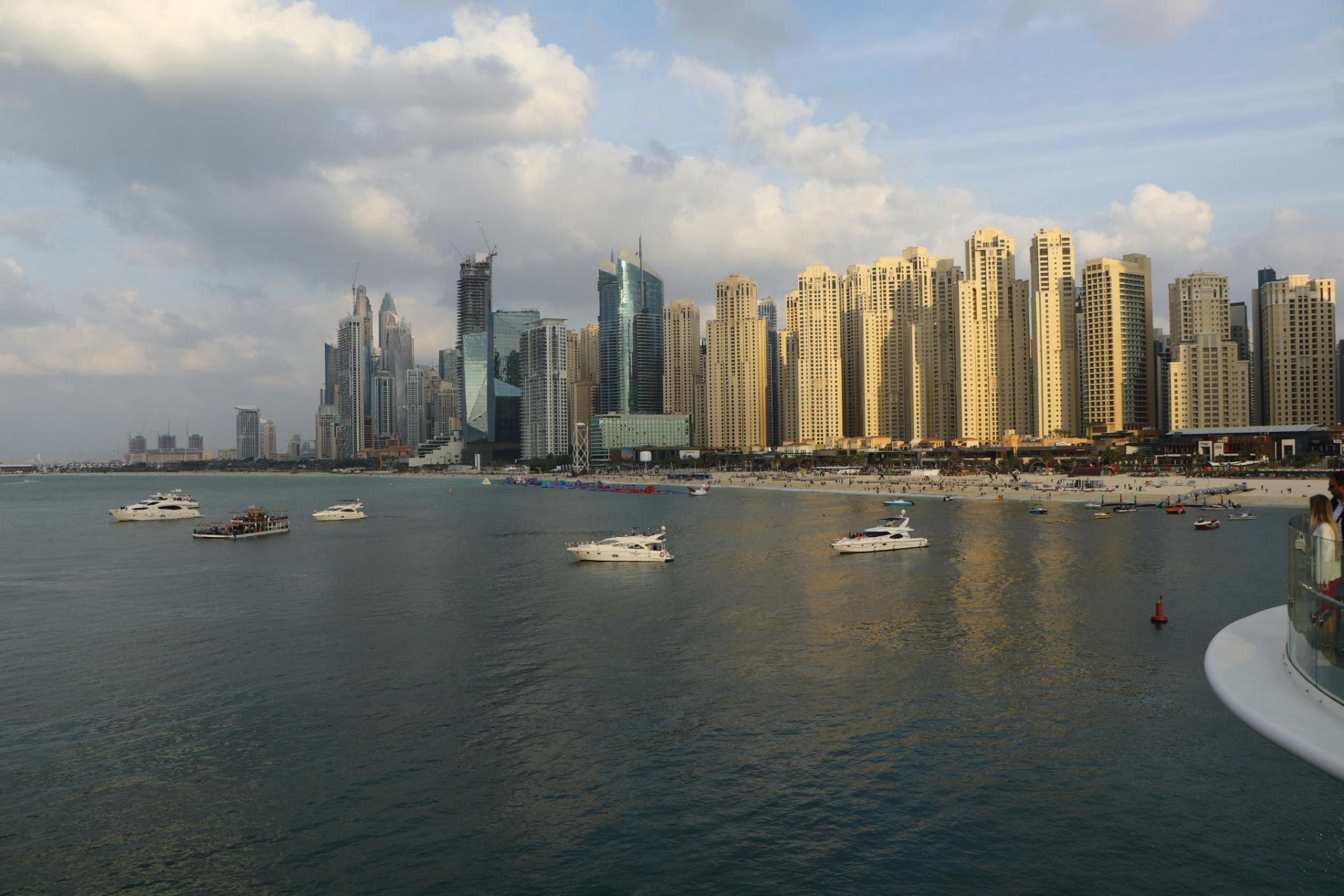
Photo by Subbu Rayan: https://www.pexels.com/photo/scenic-view-of-dubai-marina-skyline-and-waterfront-31692141/
Yet over the past two years, something noticeably different has started happening across the emirate’s skyline.
The cold glass-box minimalism that dominated much of the 2010s is slowly being replaced by something warmer, heavier, and far more sculptural. Gold-toned façades, curved balconies, flowing silhouettes, bronze detailing, and branded interiors are beginning to dominate new launches. From Business Bay to Downtown Dubai, developers are moving away from anonymous towers and leaning into recognisable visual identity.
Dubai appears to be entering a new architectural phase, one driven by curves, reflective metals, statement lobbies, and buildings designed as luxury products rather than simply places to live.
The shift is not accidental. It reflects wider changes in global luxury design, the influence of ultra-high-net-worth migration into the UAE, and a growing competition among developers to create buildings that stand out instantly on social media, drone footage, and skyline photography.
Why Curved Architecture Is Suddenly Everywhere
Walk through newer districts like Business Bay, Dubai Creek Harbour, or parts of Jumeirah Village Circle and the design language becomes obvious almost immediately. Straight lines are being softened. Sharp rectangular towers are being interrupted by wave-like balconies, rounded corners, oversized terraces, and sculpted façades.
Part of this comes down to climate. Curved balconies create more shaded outdoor areas, soften harsh sunlight, and allow buildings to feel less rigid in the intense Gulf environment. But aesthetics are playing an equally important role.
Luxury buyers are looking for homes that feel distinctive from the outside as well as the inside. Developers have realised that a building with a recognisable silhouette becomes part of its marketing strategy. In a city with hundreds of residential towers, visual identity has become commercial identity.
Dubai’s newer projects are also heavily influenced by automotive and fashion design. Many buildings now resemble luxury watches, yachts, or high-end sports cars more than traditional apartment blocks. This crossover between architecture and luxury branding has become one of the defining characteristics of the city’s current property market.
Gold finishes have naturally followed this trend. Bronze glass, champagne-coloured metalwork, brushed brass interiors, and gold-accented lighting are appearing across new developments because they photograph exceptionally well under Dubai’s sunlight. The city’s climate almost amplifies these materials, especially during sunrise and sunset when towers take on a warm metallic glow.
This is a noticeable departure from the colder blue-and-silver skyline that dominated during earlier construction booms.
Dubai’s luxury properties are no longer competing only on square footage or marina views. Developers are selling an entire visual universe around their projects. Concierge services, private lounges, branded gyms, wellness floors, infinity pools, fine dining spaces, and designer collaborations are now packaged together as part of the architecture itself.
Some of the city’s biggest developers, including Emaar, DAMAC, Nakheel, Sobha Realty, Omniyat, and Binghatti, are all pushing recognisable design identities across their newer residential towers. Instead of building simple apartment blocks, developers are creating highly branded residential experiences designed to stand out instantly within Dubai’s extremely competitive skyline.
One of the clearest examples of this newer approach can be seen through Binghatti developments, which often use dramatic geometric forms, metallic finishes, layered façades, and highly recognisable sculptural architecture. The company has become especially associated with Dubai’s newer ultra-modern visual style through collaborations connected to brands like Bugatti, Mercedes-Benz, and Jacob & Co.
Across Dubai’s upper residential market, branded residences have become one of the fastest-growing sectors overall. Buyers are no longer simply purchasing apartments. They are effectively buying into curated luxury ecosystems that combine architecture, hospitality, fashion, wellness, and status branding within a single residential experience.
Interiors now frequently include imported marble, custom materials, hotel-inspired layouts, designer furniture concepts, spa facilities, private cinemas, rooftop lounges, wellness suites, and dramatic lobby spaces that resemble five-star resorts more than traditional residential towers.
Even the naming style of towers has shifted noticeably. Earlier developments often sounded corporate or location-based. Newer projects are presented more like fashion collections, luxury vehicles, or global hospitality brands.
There is also a growing focus on theatrical arrival experiences. Marble-lined porte-cochères, valet drop-offs beneath illuminated canopies, scent-designed lobbies, private lift access, and double-height entrances are becoming standard features throughout Dubai’s premium residential developments.
The influence of hospitality is impossible to ignore. Dubai’s luxury residential sector borrows from five-star hotel culture because international buyers now expect homes to deliver the same atmosphere, exclusivity, and service experience associated with luxury travel.
Gold Is Replacing White Minimalism
For years, luxury interiors around the world were dominated by pale Scandinavian minimalism. White stone kitchens, matte black fittings, and muted neutral palettes became almost universal across premium developments.
Dubai appears to be moving in the opposite direction.
Warm metals, textured stone, glossy surfaces, dark woods, and dramatic lighting schemes are returning. Gold detailing is no longer being used sparingly. Instead, it has become central to many new interiors.
Restaurants, hotel lounges, rooftop bars, and penthouses use brass mesh panels, smoked mirrors, amber lighting, and heavily veined marble. These finishes create spaces that feel cinematic rather than restrained.
Part of this trend comes from Middle Eastern design traditions, where ornamental finishes and rich materials have long played an important role. But it is also influenced by global luxury hospitality trends emerging from cities such as Doha, Riyadh, Singapore, and Miami.
Dubai has effectively become a meeting point for these influences.
Interestingly, the gold trend is not limited to interiors. Entire façades are now incorporating bronze or gold-tinted glass systems designed to create warmer reflections against the desert sky. In areas like Downtown Dubai, this gives newer towers a distinctly softer appearance compared with older steel-and-blue developments nearby.
The result is a skyline beginning to look less corporate and more sculptural.
Social Media Has Changed Property Design
It would be impossible to discuss Dubai’s current architectural direction without mentioning social media.
Buildings are now designed with drone footage, Instagram reels, and nighttime photography firmly in mind. Developers understand that a distinctive curved façade or illuminated gold crown can circulate globally within minutes online.
In many ways, Dubai has become the world capital of photogenic real estate marketing.
Infinity pools suspended high above the city, floating lounges, rooftop gardens, and illuminated façades are no longer optional extras. They are visual marketing tools built directly into the architecture.
This explains why curves have become so dominant. Curved forms create movement in photographs. They catch light differently throughout the day and appear more dramatic from aerial angles. Straight rectangular towers simply struggle to compete visually in modern property marketing.
Even interior spaces are being designed for online visibility. Large statement chandeliers, oversized mirrors, sculptural staircases, and dramatic lobby artwork are all intended to become instantly recognisable visual signatures.
Dubai’s developers are effectively building landmarks before construction is even finished.
A New Phase For Dubai’s Skyline
Dubai reinvents itself constantly, but this current phase feels particularly distinctive because it blends architecture, branding, hospitality, and visual culture into one package.
The city’s earlier growth periods focused heavily on scale and engineering achievement. Today’s projects still aim for grandeur, but there is much greater emphasis on atmosphere, materials, and recognisable identity.
Curves soften the skyline. Gold tones warm it. Branded residences elevate buildings into luxury products. Together, they are reshaping how Dubai looks and how it markets itself to the world.
Whether this becomes a lasting architectural era or eventually gives way to another trend remains to be seen. But for now, Dubai’s skyline is becoming more fluid, more theatrical, and considerably more golden than it was just a few years ago.