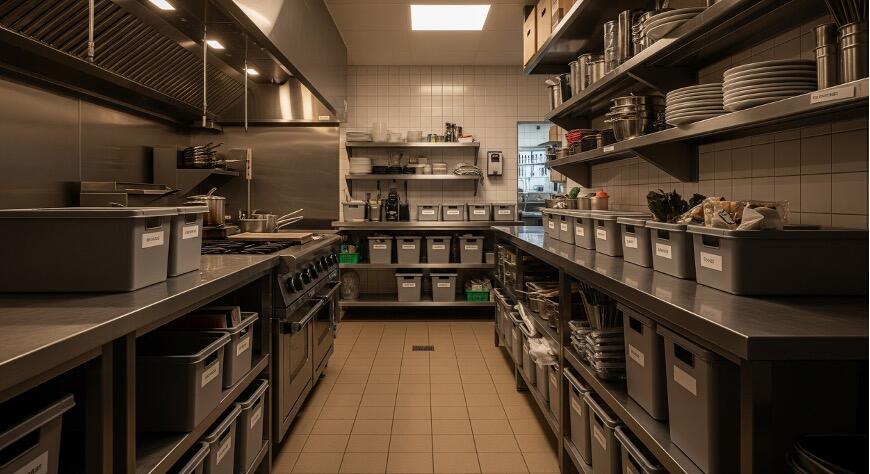
Chaos has no place in a professional kitchen. Behind every seamless service and flawless dish lies a meticulously managed environment where every ingredient, tool, and container has a designated home. For large-scale food operations, achieving this level of order isn’t just about cleanliness, it’s a fundamental strategy for boosting efficiency, ensuring safety, and protecting profitability. Intelligent storage solutions, often overlooked, form the very backbone of a high-functioning culinary enterprise.
One-Size-Fits-All Solutions
Generic containers create operational bottlenecks. Ingredients come in varying shapes, weights, and shelf lives, demanding specialized handling. Investing in tailored solutions designed for your specific inventory is a game-changer. For operations requiring durability, precise portioning, and brand consistency, procuring custom plastic storage boxes offers a significant advantage. These can be manufactured to fit particular shelving units, stack securely without toppling, and even include integrated measurements or labeling panels to streamline workflow and reduce errors during prep.
Systematic Organization
An organized storage system functions on clear, logical principles. The golden rule of “First-In, First-Out” (FIFO) is impossible to follow without a structured approach. Transparent or clearly labeled containers allow staff to identify contents instantly, eliminating wasted time searching through ambiguous packages. Strategic placement is also critical; high-use items must be easily accessible, while slower-moving products can occupy higher or less convenient shelves. This scientific methodology minimizes movement, saves valuable time, and drastically cuts down on food spoilage.
Selecting the Right Container
Not all storage vessels are created equal. The choice of material directly impacts food safety, longevity, and functionality. Glass containers offer superior non-porous cleanliness and are ideal for acidic foods but present a breakage risk. Stainless steel is incredibly durable and temperature-resilient for high-heat environments. For most high-volume applications, high-grade, food-safe plastics provide an optimal balance of durability, weight, and cost-effectiveness, especially when designed for specific operational needs.
Labeling Storage Boxes
A container without a label is a mystery box destined for the trash. Comprehensive labeling is the most effective tool for combating inventory waste. Every bin should display its contents, the date it was stored, and a use-by date. Implementing a standardized color-coding system adds another layer of efficiency and safety, for instance, using red lids for raw meat and green lids for vegetables prevents cross-contamination. This simple practice empowers every team member, from head chef to newest porter, to manage stock correctly.
Maximizing Hidden Spaces
Large kitchens must leverage every cubic inch of available space. Vertical storage is a powerful yet underutilized strategy. Sturdy, stackable containers unlock the potential of vertical airspace, freeing up precious counter and floor area. Similarly, mobile storage units on lockable casters provide flexible organization that can be moved for cleaning or reconfigured for different services. Utilizing under-counter and shelving systems with integrated containers turns dead space into highly functional storage zones.
Financial Health
Efficient organization is not an expense; it’s a revenue protection strategy. Proper storage directly reduces food spoilage, one of the largest sources of profit loss in the food industry. It also curbs unnecessary repurchasing of ingredients already buried in the walk-in. Furthermore, a streamlined kitchen reduces labor hours spent searching for items or dealing with inventory confusion. This translates into lower food costs, improved labor efficiency, and a healthier bottom line.
Operational Excellence
Ultimately, the best system is only as effective as the team using it. Training every staff member on storage protocols is non-negotiable. This fosters a shared sense of ownership and pride in the kitchen’s organization. When everyone understands the “why” behind the system, from reducing waste to ensuring safety, compliance becomes second nature. This cultural shift turns meticulous organization from a managerial duty into a collective value, creating a kitchen that is not only more productive but also a safer and more pleasant place to work.