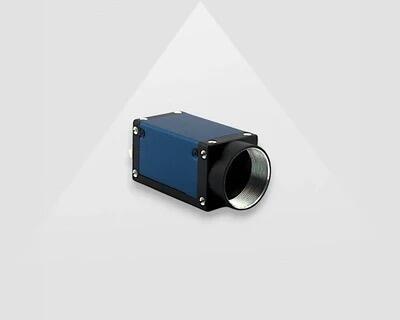
A modern packing line can move several thousand units an hour, far faster than any inspector can watch reliably for a full shift. That pace is the reason an industrial camera used in food manufacturing has become standard equipment rather than a luxury, because it checks every pack at line speed and never looks away.
The conditions a food-plant camera has to survive
A food environment is hard on hardware. Lines get washed down with hot water and caustic chemicals, temperatures swing between chilled rooms and hot fill zones, and steam fogs anything cold. Cameras here are usually sealed to an ingress rating such as IP67 or IP69K, housed in stainless enclosures, and rated for the wash-down cycle. If the housing cannot take the cleaning regime, the imaging quality stops mattering very quickly.
Checks along the process
Imaging shows up at several points, each solving a different problem:
- Incoming produce sorting by size, colour and blemish, so under-grade material is diverted before it adds cost.
- Fill level and count, confirming a jar, tray or bottle holds the right amount.
- Seal and closure integrity, catching a lid that did not seat or a film seal with a wrinkle that could let air in.
- Label and date-code reading, verifying the right label is present, legible and matches the product.
Grouping the checks this way helps a plant decide where a camera returns the most value first, which is rarely everywhere at once.
Catching what you cannot afford to ship
The highest-stakes job is foreign body and contamination detection. Standard cameras handle surface issues such as a stray piece of packaging or a discoloured item. For material hidden inside a product, plants pair vision with other sensing, since a lens cannot see through an opaque pack. The point is to match the technology to the hazard rather than expecting one camera to do everything.
How the line responds to a bad reading
Detection only matters if the line reacts in time. A typical flow runs like this:
- A trigger fires as the pack reaches the inspection point.
- The camera captures and the software grades the pack against its limits.
- A pass lets the pack continue; a fail sends a signal to a reject arm downstream.
- The event is logged with an image, building a record for audits and trend analysis.
That logged image is often what turns a customer complaint into a five-minute investigation instead of a day of guesswork.
Traceability and audit value
Beyond catching defects, stored images and readings support the paperwork the industry runs on. When a retailer or auditor asks for proof that a batch met spec, a plant with image records can show exactly what shipped and when. That evidence trail shortens recalls, narrows their scope, and demonstrates due diligence that a manual line simply cannot produce after the fact.
Common questions from food producers
Can a camera handle wash-down cleaning?
Purpose-built ones can. Look for a stainless housing and an IP69K rating, which certifies resistance to high-pressure, high-temperature wash-down. A standard factory camera without that protection will not last in a hygienic zone.
Does imaging replace metal detection?
No, they cover different hazards. Metal detectors and X-ray find contaminants inside a product, while cameras cover surface, seal, label and fill issues. Most plants run them together as layers of the same safety net.
How fast can it inspect packs?
Fast enough for typical high-speed lines, often several thousand units an hour, depending on pack size and the check involved. Reading a date code is quicker than a full seal inspection, so real throughput is set by the hardest check on that station.
Will it cope with product that varies naturally?
Yes, within reason. Fresh produce varies in shape and shade, so the system is taught a range of acceptable appearance rather than a single template. Setting those limits from real samples is what keeps natural variation from triggering false rejects.
What does adding a camera involve?
Usually mounting the unit and lighting at the inspection point, wiring a trigger and a reject signal, and teaching the check from good and bad samples. The lighting and part presentation take more setup effort than the camera itself.
Vision as part of the food-safety toolkit
Imaging is one layer among several, alongside metal detection, X-ray and manual checks. Used where it is strongest, on fill, seals, labels and surface defects, it removes a large share of the errors that reach a customer while creating the records a modern food operation needs to prove its quality.